Medically Reviewed by Dr. Lina Akopians, MD, PhD, FACOG | Last updated 11.16.26
Does taking a GLP-1 agonist affect fertility and pregnancy? Quick answer: Yes, this type of medication can indirectly impact your chances of getting pregnant. The American College of Obstetricians and Gynecologists (ACOG) currently recommends stopping GLP-1 agonist medications like Ozempic, Wegovy, Mounjaro, or Zepbound 1-2 months before trying to get pregnant.
These are newer drugs so research is limited on the effects of taking them around the time of conception. However, guidelines may change in the future as more research becomes available.
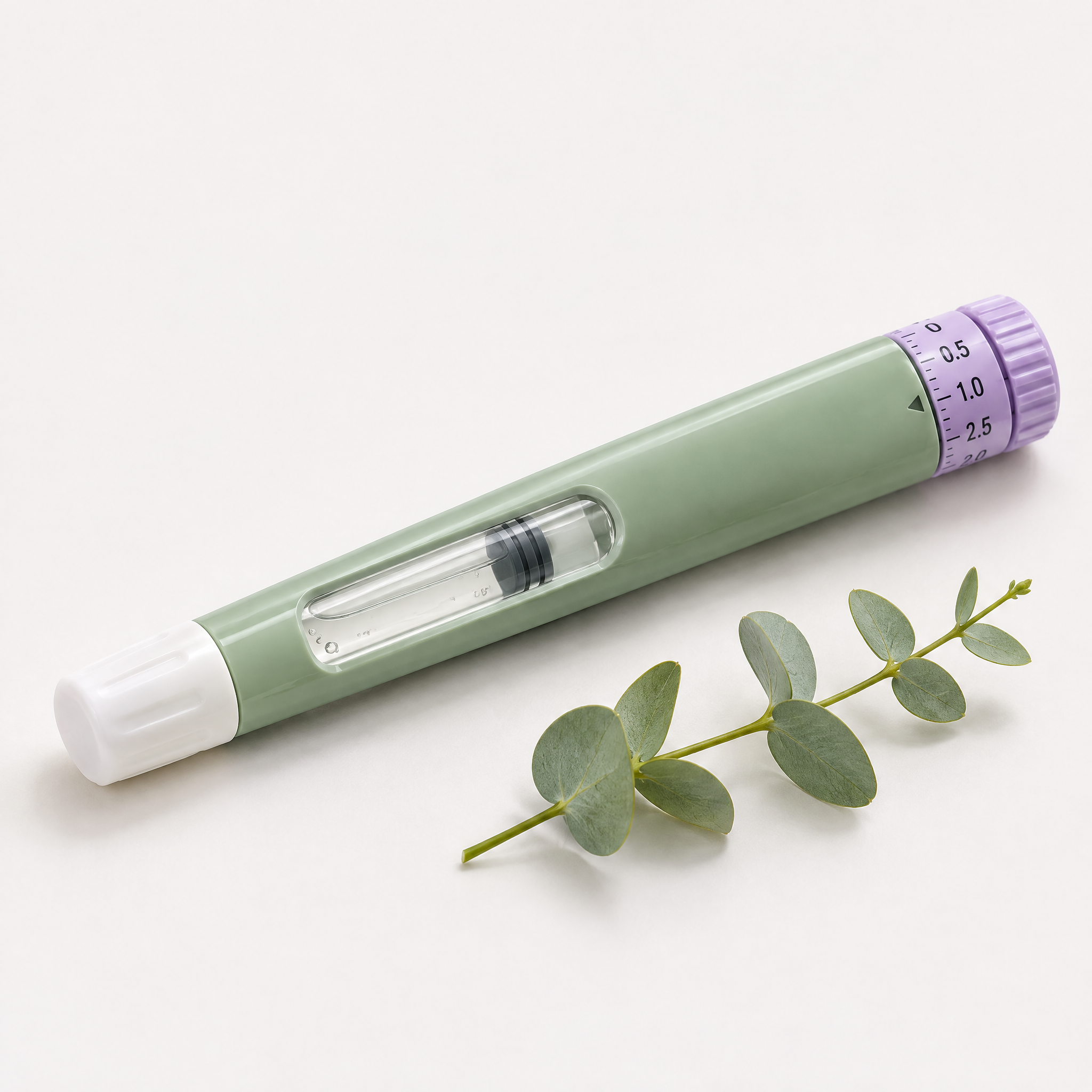
GLP-1 agonist medications have changed how many people lose weight, and social media is full of stories about surprise pregnancies while taking them. At Beverly Hills Reproductive Center, we ask every patient whether they're taking one, because the answer shapes their care.
Can GLP-1 Agonists Help You Get Pregnant?
Indirectly, yes. They help with weight loss, and a healthier BMI has been shown to help restore ovulation, especially in women with PMOS (formerly PCOS). Obesity is one cause of infertility that can hinder your chances of pregnancy even with treatment: a US study of more than 239,000 IVF cycles found pregnancy outcomes declined as BMI rose.
If you get pregnant while taking a GLP-1 agonist, stop right away and contact your doctor. Because there aren’t any clinical trials in pregnancy and animal studies showing early pregnancy loss and fetal abnormalities, the Endocrine Society and The European Society of Endocrinology (ESE) recommend that women with diabetes stop these medications before pregnancy. Manufacturer labeling also recommends stopping Ozempic and Wegovy, both of which contain the active ingredient semaglutide, at least two months before a planned pregnancy.
What Does the Research Say on Exposure in Early Pregnancy?
So far, research on GLP-1 agonist exposure in early pregnancy is reassuring, but limited. Two 2026 meta-analyses, one involving more than 40,000 exposed pregnancies and another involving more than 49,000 exposed pregnancies, found no significant increase in birth defects, stillbirth, spontaneous abortion, babies small for gestational age (SGA), or preterm birth. A 2026 study in Annals of Internal Medicine similarly found no clear increase in pregnancy loss, abnormal fetal growth, or major birth defects among women who took a GLP-1 agonist during the first trimester.
These studies are observational, meaning researchers looked at pregnancy outcomes rather than testing the medications in clinical trials. Therefore, they can't prove GLP-1 agonists are safe in pregnancy. Tirzepatide (Mounjaro/Zepbound) is newer, and even less is known about its effects on pregnancy.
How to Use a GLP-1 Agonist Safely Before TTC
How you lose weight matters as much as how many pounds you lose. Eating too little, such as fewer than 1,000 calories a day, can deprive your body of nutrients and energy. Nausea is a common side effect of GLP-1 agonists that makes it difficult to eat enough. That can affect fertility and lead to vitamin deficiencies that may affect a future pregnancy.
To protect your fertility:
Work with a dietitian or nutritionist
Eat enough protein and calories
Stay hydrated
Keep exercising
Aim for slow, steady loss instead of pushing to higher doses
Have your labs and vitamin levels checked before you start, and continue monitoring while on GLP-1 agonist treatment
Compounded GLP-1 agonists prescribed through telehealth deserve extra caution, because your labs and nutritional intake may not be as closely monitored. For more, read Lifestyle Factors and Fertility: 22 FAQs.
Worried About Gaining Weight After You Stop?
Some weight gain after you stop taking a GLP-1 agonist is common. If you’re planning to get pregnant, stopping your GLP-1 agonist before conception is important, but it’s also important to have a plan for maintaining your weight and nutrition after stopping. If you have type 2 diabetes, your plan should include proactive glycemic management to help you avoid rebound weight gain and hyperglycemia in your first trimester of pregnancy.
A JAMA study of nearly 1,800 pregnancies found that women who stopped a GLP-1 agonist before or early in pregnancy gained more weight and had higher rates of preterm delivery, gestational diabetes, and high blood pressure than women who never took one. That's why it’s crucial to get guidance from a doctor or nutritionist to help you build lasting healthy habits.
Healthy weight gain during pregnancy depends on your starting BMI. These are the targets endorsed by the American College of Obstetricians and Gynecologists for one baby:
Recommended Pregnancy Weight Gain by Starting BMI
| Starting BMI | Total gain | Per week (2nd & 3rd trimester) |
|---|---|---|
| Under 18.5 | 28–40 lb | About 1–1.3 lb |
| 18.5–24.9 | 25–35 lb | About 0.8–1 lb |
| 25–29.9 | 15–25 lb | About 0.5–0.7 lb |
| 30 or higher | 11–20 lb | About 0.4–0.6 lb |
Source: Institute of Medicine (IOM) guidelines. Individual needs vary; discuss with your physician.
For simple, sustainable habits, see 7 Ways to Optimize Your Fertility.
Frequently Asked Questions
Can I stay on my GLP-1 agonist while trying to get pregnant?
No, there is not enough data to determine if taking GLP-1 agonist medication is safe for pregnancy. Certain GLP-1 agonist medications (Ozempic/Wegovy) take time to clear from your system.
What if I find out I'm pregnant while taking one?
Stop right away and contact your doctor. Early US research hasn't shown a clear increase in birth defects, but there are no clinical trials in pregnancy.
Do I need to stop before egg retrieval?
Yes. We recommend that patients stop at least one month, ideally two, before ovarian stimulation. We also recommend stopping at least one to two weeks prior to any procedure that requires anesthesia, including egg retrieval for IVF or egg freezing. GLP-1 agonists slow digestion, which can raise the risk of food entering the lungs under anesthesia.
Can my partner stay on his GLP-1 agonist?
Yes, even after you're pregnant. Obesity raises scrotal temperature, which can affect sperm movement and shape, so losing weight may improve sperm health. Learn more about Causes of Infertility in Men.
What will my fertility doctor ask about my GLP-1 agonist?
First, whether you're taking one, since many patients forget to mention it. Then which medication, the dosage, who prescribes it, your recent lab results, and your nutrition.
Do GLP-1 agonists make birth control less effective?
Tirzepatide (Mounjaro/Zepbound) can, because it lowers how much hormone your body absorbs from birth control pills. If you're taking it, use a non-pill method or add condoms for 4 weeks after starting and after each dose increase to prevent pregnancy. Semaglutide (Ozempic/Wegovy) hasn't shown this effect on birth control pills.
The Bottom Line
GLP-1 agonists may support fertility by improving a woman’s BMI. Use them with supervision, eat enough to nourish your body, and talk to your doctor about how long you should be off your medication before trying to conceive.
Request a consultation. Limited spots available.

About the Author
Dr. Lina Akopians, MD, PhD
Double Board-Certified Fertility Specialist & Founding Physician, Beverly Hills Reproductive Center
Dr. Lina Akopians is a double board-certified OB/GYN and Reproductive Endocrinology & Infertility (REI) physician and the founding physician of Beverly Hills Reproductive Center in Beverly Hills, California. She earned her Ph.D. in physiology at UCLA and completed her REI fellowship at UCLA/Cedars-Sinai, has over 10 years of experience, and has cared for more than 10,000 fertility patients since 2016.
Named a Castle Connolly Top Doctor and a Los Angeles Magazine Top Doctor, she treats IVF, IUI, egg and embryo freezing, and LGBTQ+ family building, and teaches human anatomy and physiology at UCLA Extension. She sees patients in Beverly Hills and from the Los Angeles area and speaks English, Armenian, and Farsi.