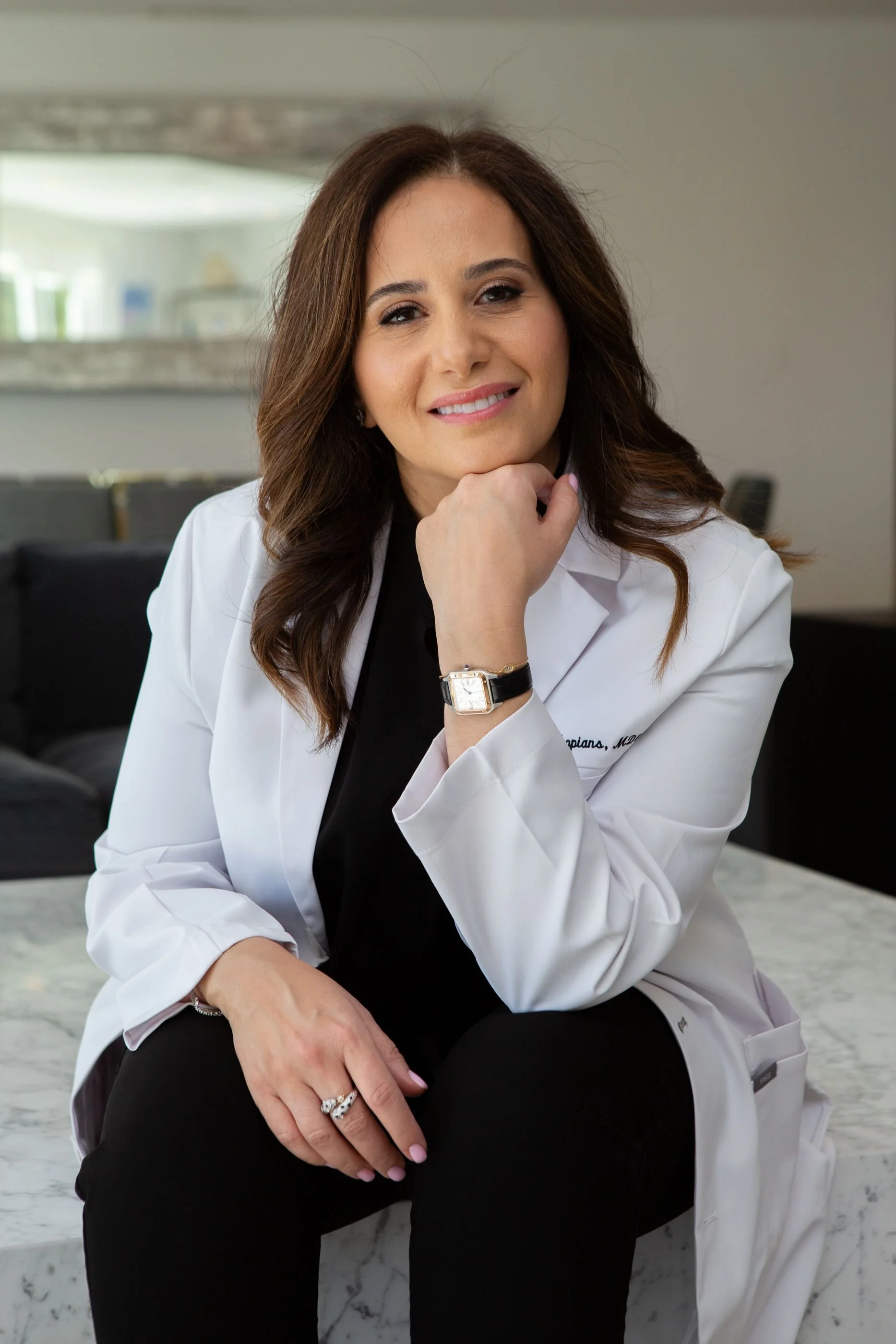
Reviewed by Lina Akopians, MD, PhD, FACOG
It’s easy to find information about fertility online, but it’s hard to know which opinions you can trust.
With so many conflicting voices, it’s not surprising that most people feel confused or overwhelmed at the start of their fertility journey.
We hear a lot of the same questions and misconceptions from new patients. Below, we’ve pulled together some of the most common fertility myths you might have heard and what you should know instead from our founding physician, Dr. Akopians.
Misconceptions About Infertility & Fertility Treatment
Myth 1: "Infertility is mostly a women’s issue."
Male factor infertility is not as uncommon as people often believe. Research shows that male factors play a role in a couple’s challenge to conceive in 30% of cases. In some populations, the percentage is even higher. And despite the mainstream focus on how female age affects fertility, male fertility also declines with age. Advanced paternal age is associated with:
Lower sperm concentration and motility (in other words, sperm volume and movement)
Greater DNA fragmentation, which negatively impacts fertility
Potentially lower pregnancy rates after IUI or IVF
Higher risks of miscarriage and complications like preeclampsia, preterm birth, low birth weight, and stillbirth
Increased rates of autosomal dominant mutations, which can raise the risk of conditions such as autism spectrum disorder, schizophrenia, bipolar disorder, Marfan syndrome, and more
When a couple has a hard time conceiving, it’s important to evaluate the reproductive health of both partners.
Myth 2: "Freezing your eggs depletes your reserves."
A common question we hear before egg freezing is, “Will this use up my egg reserves?” The answer is no — freezing your eggs does not reduce your egg supply.
Women are born with roughly 1-2 million follicles, and the body naturally loses up to 1,000 eggs each month. While only one egg is typically lost through menstruation, many more are reabsorbed by the body during a cycle.
By freezing your eggs, you’re capturing a small portion (often between 5-20) of the follicles that would already have been lost that month. In other words, egg freezing doesn’t speed up egg loss.
Exploring fertility preservation in Beverly Hills? Learn more about egg freezing at Beverly Hills Reproductive Center.

Myth 3: “Certain tricks can improve the odds of having a boy or girl.”
It’s common for people to theorize about ways to naturally “choose” their baby’s sex. For example, you might know a couple that’s trying for a girl after multiple boys, or vice versa. They might have heard that timing intercourse a certain way, using specific positions, elevating your legs, or changing your diet can influence a baby’s sex.
There’s no scientific evidence that these tricks increase the chances of conceiving a boy or a girl. They don’t influence sperm behavior, and they don’t change the natural odds of conception.
The way to select a baby’s sex is through IVF with preimplantation genetic testing (PGT), where chromosomal copy number in the embryos are tested before transfer.
Myth 4: “Birth control can affect your fertility.”
It’s a common question, but birth control does not cause infertility. A large review of 22 studies including more than 14,000 women found that hormonal contraceptives and IUDs do not impact your ability to get pregnant once they’re stopped. Some methods may cause a short delay before cycles return to normal, but this is temporary.
Fact: Birth control can hide underlying fertility issues
While birth control doesn’t affect your long-term fertility, it can mask potential problems. Everything may seem “normal” while you’re on birth control, and the first sign of a problem may only show up after stopping.
Because birth control regulates hormones or suppresses bleeding, it can hide signs of:
Irregular ovulation
Amenorrhea (absence of periods)
Premature ovarian insufficiency
Other reproductive health conditions
If you’re concerned, try coming off of birth control for a short time to see if your periods return normally. (Be sure to use other methods of contraception in the meantime.) Or reach out to a local fertility clinic for testing.

Myth 5: “If you’re healthy, it shouldn’t be hard to conceive.”
It’s defeating when you live a healthy lifestyle and “do everything right” but still struggle to get pregnant. And it can feel unfair when people who don’t follow the same habits seem to conceive easily.
Lifestyle factors are an important part of fertility, but there are also underlying biological elements outside of anyone’s control. Some conditions simply aren’t visible from the outside and may not cause issues until someone starts trying to conceive.
If you’re trying to conceive and it’s harder than you expected, it doesn’t mean you did something wrong. Your frustration is valid, and we can help you find answers when you’re ready.
Myth 6: “You should try for a year before seeing a fertility doctor.”
For women under 35, female infertility is defined as the inability to achieve pregnancy after 12 months of regular unprotected sex. The guideline to “try for a year first” generally comes from this definition, as some insurances require a medical diagnosis of infertility to offer coverage. But this doesn’t mean you need to wait a year before getting tested or starting treatment.
Seeking guidance earlier can be helpful if you:
Are 35 or older
Have irregular cycles or an absent period
Have a medical history that could affect fertility, such as cancer treatment
Have specific family building goals
Simply want clarity sooner
Getting answers early can help you plan confidently and avoid months of unnecessary stress.
Get your questions answered at Beverly Hills Reproductive Center
If you’re feeling uncertain or overwhelmed, a conversation with a fertility specialist can make all the difference. Reach out to schedule a fertility consultation with Dr. Akopians for clear answers and personalized guidance.

About the Author
Dr. Lina Akopians, MD, PhD
Double Board-Certified Fertility Specialist & Founding Physician, Beverly Hills Reproductive Center
Dr. Lina Akopians is a double board-certified OB/GYN and Reproductive Endocrinology & Infertility (REI) physician and the founding physician of Beverly Hills Reproductive Center in Beverly Hills, California. She earned her Ph.D. in physiology at UCLA and completed her REI fellowship at UCLA/Cedars-Sinai, has over 10 years of experience, and has cared for more than 10,000 fertility patients since 2016.
Named a Castle Connolly Top Doctor and a Los Angeles Magazine Top Doctor, she treats IVF, IUI, egg and embryo freezing, and LGBTQ+ family building, and teaches human anatomy and physiology at UCLA Extension. She sees patients in Beverly Hills and from the Los Angeles area and speaks English, Armenian, and Farsi.